
The Primacy of Preaching
By John Hooper


How then shall they call on him in whom they have not believed? and how shall they believe in him of whom they have not heard? and how shall they hear without a preacher? Romans 10:14
It is popular in these days to disparage preaching. No, I do not mean individual preachers with their own styles and mannerisms that we might not like, I refer to something much more fundamental – the very practice of preaching itself. Its place in the life of the church is challenged. Its relevance to the spiritual needs of modern man is questioned as church leaders try to explain their declining congregations and stem the hemorrhage.
So often the blame for the church’s problems is put on the preaching, and hence the preaching is so often the first aspect of church life targeted for change. It must be made more appealing, more relaxed and less formal, more practical and less doctrinal. Rather than being the central and dominant feature of worship it is reduced to just one of a number of “items” designed to entertain the congregation, with music playing a prominent role.
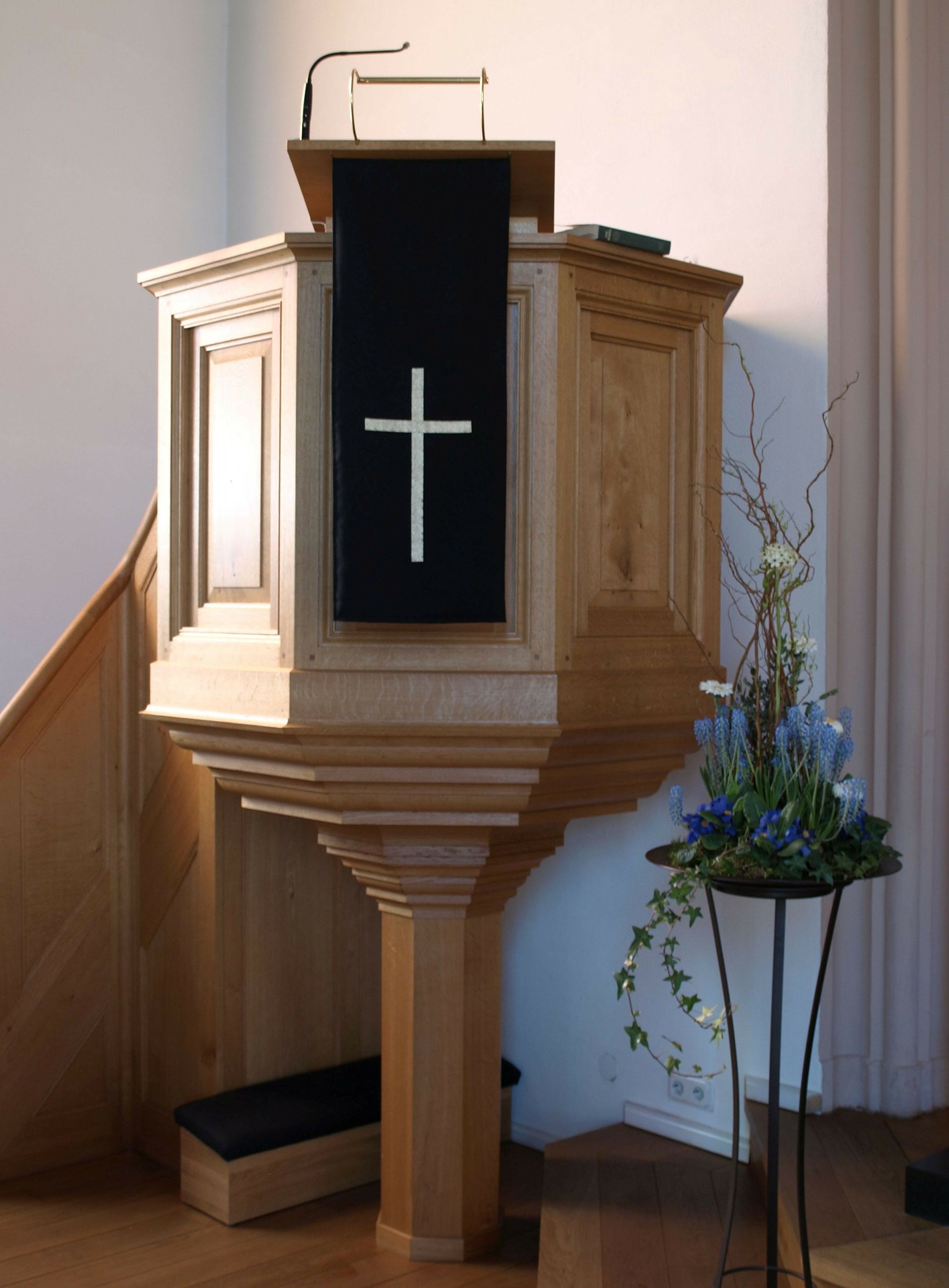
The average person today, so it is said, is not able to sit in a pew and concentrate for thirty or forty minutes under the tones of a preacher: the whole approach is considered inappropriate in the age of the soundbite. People are more attracted by action than by words. There must be movement, dance and drama; or perhaps a more discussional approach to give everyone opportunity to contribute and feel involved; or a coffee-shop format to put everyone at their ease. The outcome of this is that even the pulpit, traditionally given a central and raised position at the front of the church building to symbolize the centrality, primacy and authority of preaching, has been pushed to one side or is no longer used. In its place has come the stage, or even just the floor. Such is the modern church’s estimation of the value of preaching.
For Jew and Gentile
In Romans chapter 10 the apostle Paul stresses the universality of the grace of God in this New Testament age. It is grace now to the Gentile as well as to the Jew. There is no longer a difference, “for the same Lord over all is rich unto all that call upon him. For whosoever [i.e., whether Jew or Gentile – JH] shall call upon the name of the Lord shall be saved” (vv. 12-13). The problem, however, was that the Gentiles did not believe in the Lord, so how then could they call upon Him? Not only that, they had not heard of Him, so how could they believe in Him? The Gentile nations, who for four thousand years had been largely left in spiritual darkness, were now to be made fellow-heirs and partakers of the promise. The riches of the grace of God, which had so far been almost solely reserved for Israel, were now to be enjoyed by all nations of the earth. The things that had once been hidden were now to be revealed, and they were to be revealed by preaching. “Faith cometh by hearing, and hearing by the word of God” (v. 17).
The spoken word
God speaks! Our God is no dumb idol. Once, He spoke the world into existence. No fewer than ten times in Genesis 1 do we read the words, “And God said….” Then He talked with our first parents in the garden, “they heard the voice of the LORD God walking in the garden in the cool of the day” (Genesis 3:8). Subsequently, God revealed Himself to His people, such as Noah (6:13; 9:17), Abraham (17:9, 15, 19), Jacob (35:1, 10, 11), and Moses (Exodus 3:14-15), by speaking to them.
Moses is especially significant because he was the old covenant mediator between God and the children of Israel, typifying the one Mediator between God and men who was to come, the man Christ Jesus (1 Timothy 2:5). Jehovah spoke to His people through Moses, and it was through Moses that they, in turn, were able to approach Him. In this Moses exercised the functions of both prophet and priest: he brought to men the revelation he received from God, and he interceded before God on their behalf. It is with the first of these, the office of prophet, that we are primarily concerned here.
A prophet was one ordained by God to speak on the behalf of, and in the name of, God Himself. When the prophets of Israel spoke to the people it was with a “thus saith the LORD,” and there are hundreds of examples that could be given. Here are just a few: Moses (Exodus 11:4); Joshua (Joshua 24:2); Nathan (2 Samuel 12:7); Elisha (2 Kings 7:1); Isaiah (Isaiah 43:1); Jeremiah (Jeremiah 2:2); and Zechariah (Zechariah 1:3). Each one had a message received from Jehovah for His people, meaning that when those people heard the prophet they were listening to the very words of God, no less than if He were speaking to them directly. The prophet did not speak on his own behalf, in his own name, choosing his own words or expressing his own views and opinions on the issues of the day: he was the mouthpiece of God.
When the prophet spoke, he demanded a hearing, even as God Himself demanded a hearing: “Stand in the gate of the LORD’s house, and proclaim there this word, and say, Hear the word of the LORD, all ye of Judah, that enter in at these gates to worship the LORD” (Jeremiah 7:2); “Therefore, ye shepherds, hear the word of the LORD” (Ezekiel 34:7); “Hear the word of the LORD, ye children of Israel” (Hosea 4:1). These were not man’s words being spoken but God’s in which He was revealing something of His character and will, and He must be heard through His servant, the prophet.
The living Word
This revelation of God to man by word is seen supremely in our Lord Jesus Christ, the incarnate Word. “In the beginning was the word, and the word was with God, and the word was God … And the word was made flesh, and dwelt among us” (John 1:1, 14). In the Word, that same Word by whom all things were made, and without whom was not anything made that was made, God is made known to us: “No man hath seen God at any time; the only begotten Son, which is in the bosom of the Father, he hath declared him” (John 1:18). It is noticeable that in this verse the Son reveals the Father by the words of His lips, by declaring Him, by telling Him forth. Christ is being presented to us here in His prophetic office, as the One who has been sent with heaven’s authority to make known to sinful men the mind and will of God. “God, who at sundry times and in divers manners spake in time past unto the fathers by the prophets, Hath in these last days spoken unto us by his Son” (Hebrews 1:1-2). Having at one time spoken to His people through the prophets, God now speaks to us in His Son, Jesus Christ, the Word.
An important distinction, however, between the Old Testament prophets and our Lord Jesus Christ is that Christ is not so much the bringer of a message as He Himself is the message, declaring to the world in His life and in His death the righteousness and grace of God. Christ did not come merely to speak the Word of God for He is the Word of God. Similarly, He did not come only to show the way for He could say “I am the way” (John 14:6), not just rendering salvation available and possible but mightily and graciously saving, for He is Jesus, Jehovah-Saviour who “shall save his people from their sins” (Matthew 1:21).
Hearing Christ
After Christ had ascended to His glory at the Father’s right hand, and He was no longer on earth in bodily form, His voice continued to be heard. The Word still went forth. Paul reminds the believers at Ephesus of this very fact in his letter to them. He points out that even they had heard Christ and been taught by Him. Obviously, they had not seen Him physically or heard His natural voice, but still Paul was able to write, “If so be that ye have heard him, and have been taught by him” (Ephesians 4:21). How could this be?
It was the calling of the apostle Paul to “preach among the Gentiles the unsearchable riches of Christ” (3:8), but that meant more to him than speaking about Christ in an indirect or second-hand manner. To preach is to cause the very Word of God Himself to be heard. The preacher is the vehicle, the mouthpiece, through whom Christ Himself speaks. It is through the preacher that Christ calls His people to Himself, calling them to repentance and belief in His name. Through the preacher Christ is calling, “Come unto me, all ye that labour and are heavy laden, and I will give you rest” (Matthew 11:28). This is the continuation of the prophetic office in our day. “The work of a prophet is to deliver messages from God to men. Therefore, those who proclaim the Word of God represent Christ as prophet.”
How, asks Paul in Romans 10:14, shall they believe in Him whom they have not heard? Yes, that is his meaning. It is one thing to hear of or about the Saviour but quite another thing to hear Him, to hear His voice speaking personally and powerfully to the heart. It is the difference between listening and hearing. No sinner is saved by only hearing about Jesus. He Himself once said to a hostile crowd, “Verily, verily, I say unto you, He that heareth my word, and believeth on him that sent me, hath everlasting life, and shall not come into condemnation; but is passed fromdeath unto life” (John 5:24). Dr Martyn Lloyd-Jones comments on this text,
The people to whom He was preaching were all listening to Him but despite their listening, they did not hear Him…. Men and women can listen to gospel sermons without hearing Christ. There are people who can sit and listen to the gospel the whole of their lives and never hear it.
But those who truly hear are those for whom the Word of the Lord is “quick, and powerful, and sharper than any twoedged sword, piercing even to the dividing asunder of soul and spirit, and of the joints and marrow, and is a discerner of the thoughts and intents of the heart” (Hebrews 4:12).
The sinner can only believe having first heard the voice of the Saviour calling him, but how can he hear without a preacher? As we have noticed, it is Christ’s own promise that “He that heareth my word, and believeth on him that sent me, hath everlasting life, and shall not come into condemnation; but is passed fromdeath unto life. Verily, verily, I say unto you, The hour is coming, and now is, when the dead shall hear the voice of the Son of God: and they that hear shall live” (John 5:24-25). When the Shepherd calls, “My sheep hear my voice, and I know them, and they follow me” (John 10:27). This was the voice that was heard in Ephesus, and that voice is still with us. It still calls and it is still heard. It is heard in preaching.
The preacher’s remit
This brings us to the very close connection that exists between Christ and the Scriptures. The mere fact that both are called “the Word” underlines this. One is the living, incarnate Word; the other is the living, written Word. We have the same Word with us today no less than did the disciples when Jesus was with them in the flesh, because He Himself is the essence and substance of the Word.
Christ is the very heart of all the Scriptures. We say that He is the subject of the Scriptures because every page, every verse speaks of Him and points to Him, but we must go further. Christ is the very object of the Scriptures. Not only do they speak about Christ, but it is He Himself who speaks through them. The Scriptures are His Word, His words which He utters, hence they are called by the apostle “the word of Christ” (Colossians 3:16). It is through the Scriptures, then, that the voice of Christ comes to us.
God reveals Himself to us in the Bible. It is true that we may know God in a limited way through the creation and His providential government of the universe, all of which leave men “without excuse” (Romans 1:20), but, to quote the Belgic Confession of Faith, “He makes Himself more clearly and fully known to us by His holy and divine Word, that is to say, as far as is necessary for us to know in this life, to His glory and our salvation.” (Article 2)
The remit of the preacher, then, is to “preach the word” (2 Timothy 4:2) and nothing else. He is to bring to men the holy and divine Word of God which alone is able to make them wise unto salvation. When the man in the pulpit strays beyond Scripture, he ceases to preach. Like the prophets of old he is not to bring his own message, his own thoughts and ideas, the wisdom and philosophies of men, but solely the Word of God, and to speak it with a “thus saith the Lord.” Then, by the foolishness of preaching, it pleases God to save them that believe.
This is the mystery of preaching, that God should use men, “earthen vessels,” as the means to accomplish His great purposes of salvation, “that the excellency of the power may be of God, and not of us” (2 Corinthians 4:7). How this should humble the preacher. He is entirely dependent on the Lord, the great Head of the Church for his commission (Romans 10:15), his message, and for all the fruits of his labours.
Christ builds His church
By the preached Word Christ builds His church. It may be one here and another there, or ten here and twenty there. Without fail He calls His people out of darkness and into His most marvellous light, convicting them of sin and bringing them into the glorious liberty that belongs to the children of God. By the preached Word, Lord’s Day by Lord’s Day, our Saviour saves and sanctifies His people by speaking to them, building them up in the faith, encouraging them, guiding and warning them, comforting and rebuking them. What a serious matter it is, then, when the preaching of the Word is disparaged and counted as of little value and relevance. What a tragedy it is for the Lord’s people when they go to His house to hear His Word, His voice, only to be presented with a miscellany of humanly devised novelties which man, in his arrogance, has judged to be an improvement on God’s own appointed method.
Where is the voice of the Lord to be heard in dance, mime and drama? Such things are the modern equivalent of the dumb images of pre-Reformation worship. The Heidelberg Catechism asks whether they might be tolerated but then responds in the clearest of tones, “No: for we must not pretend to be wiser than God, who will have His people taught, not by dumb images, but by the lively preaching of His Word.”
To silence the preacher is to silence the voice of God. It is to silence the call of the Saviour. It is to withhold from sinners the glad tidings of salvation, and it is to starve the hungry people of God of the bread of life they need, producing Christians who are spiritually stunted and weak. And God is offended.
It is no coincidence that the times of greatest blessing in the history of the church, such as during the Reformation in the sixteenth century, or the Puritan era in the seventeenth century, or the Awakening in the eighteenth century, have also been the times of greatest preaching. Neither is it coincidence that when there is a dearth of gospel preaching, whether because of a liberal theology as in the nineteenth century, or a reliance on the methods of this world as in the twentieth and twenty-first centuries, churches decline and die. That death does not necessarily mean the final closure of church doors, although that has been happening on a large scale over the last fifty years. It may mean that there are large numbers of people in attendance and superficially a church may seem very much alive, but liveliness does not equate with spiritual life. Life is where Christ is present by His Spirit in hearts that love the truth, are hungry for it, and where His voice is heard in the faithful preaching of the gospel.
But we are not to be down-hearted. While the situation in this country and elsewhere in the west, suggests that the glory of the Lord is departing, we can be sure that the gathering of the elect into the body of Christ goes on and great glory is due to His name. Across the world there are growing churches, especially in the east and where persecution is prevalent. Even in the UK faithful preaching can still be heard, albeit on a much smaller scale than was once the case. This decline should drive us to fervent prayer to our Lord, the Head of the church, that He might look upon His local churches in mercy to bring them reformation and a return to true religion, spiritual worship, and faithful preaching. He is able, do not doubt it.
Finally, it is the testimony of Scripture that while the preacher is the instrument, the “earthen vessel” of which the apostle speaks, Christ is the power. The same apostle wrote of this power, reminding the Thessalonian believers, “our gospel came not unto you in word only, but also in power, and in the Holy Ghost, and in much assurance” (1 Thessalonians 1:5). It is Christ Himself who builds; it is Christ Himself who saves so that even the gates of hell shall not prevail against the church and the building of it. All the elect shall be saved. None shall be missed. Despite all the failings and unfaithfulness of men, Christ will send His Word to those who must be saved, and He will call them by His mighty power, and they shall be saved.