
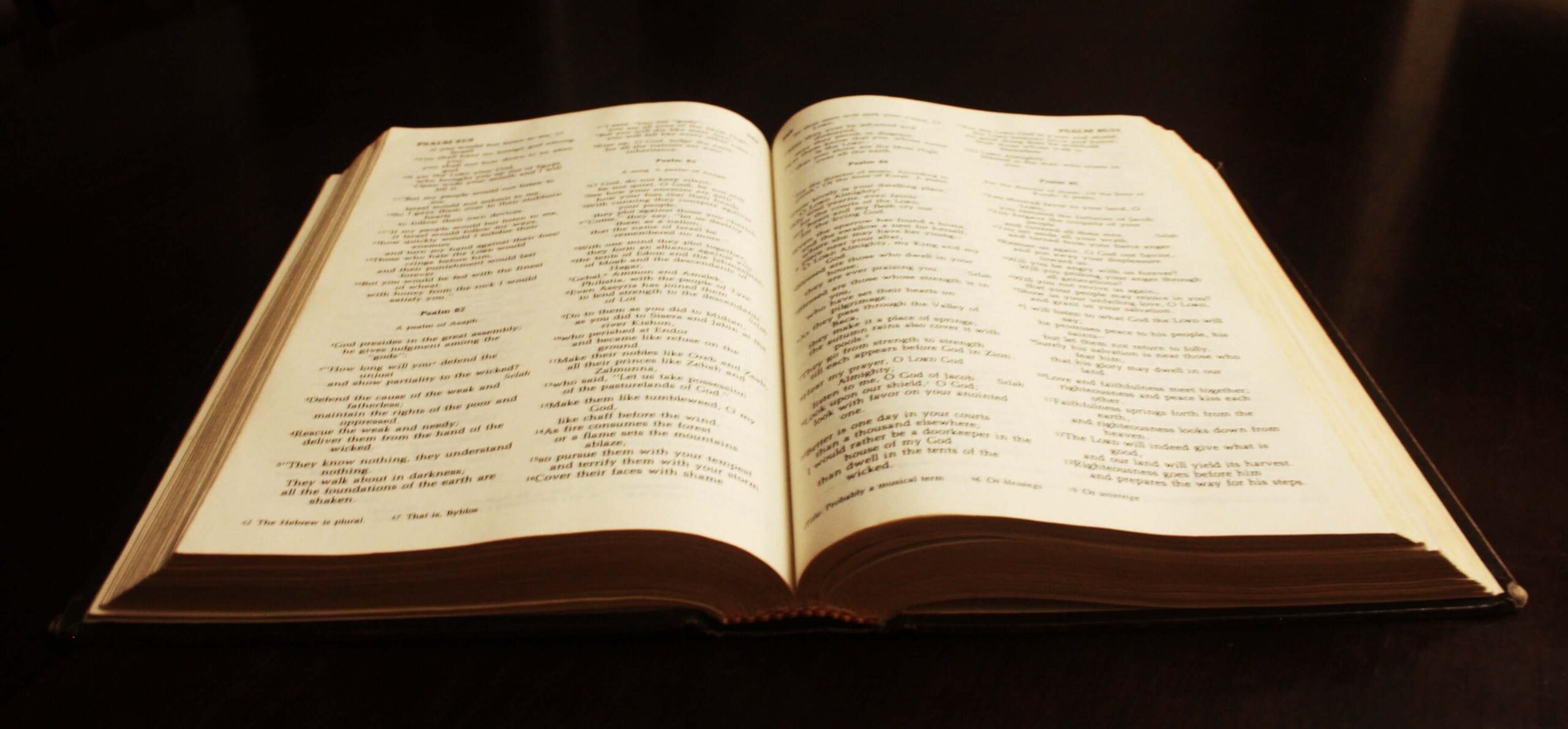
The Authority of the Holy Scriptures 2
By Graham Bidston


In 2 Peter 1:21, the apostle says positively how the Scriptures did come into being, and this surely is one of the most wonderful and majestic statements that is found in the whole of the New Testament: “The prophecy came not in old time by the will of man: but holy men of God spake as they were moved by the Holy Ghost.” Here is the authority of Scripture, and it is so important to us because of this statement alone, “Holy men of God spake as they were moved by the Holy Ghost.” Is this not wonderful? Men, yes, but “holy men of God.”
Significant
It is surely significant that in most modern Bible versions there is only one “holy” in this verse; one “holy” is left out. The RSV, the NASB, the NIV leave out the first “holy,” that is with reference to the men. They have it in for “Holy Ghost.” The New King James has “holy” in the text and then has a footnote to say that the Nest1é’s and United Bible Society’s Greek text has “men spoke from God.” They are all wrong. The Greek text has two “holys” in it. The Greek text says, “holy men of God spake as they were moved by the Holy Ghost.”
Is this word “holy” a word of which to be ashamed? It would seem so, if it is being left out of these versions. But, you see, this is something of immense importance. We are being told by Peter, who was himself a man, that the men who were used were holy. When men speak against the Scriptures they are not, as so many people say, speaking against the writers. They may say, “Oh, that is only Paul. He had his own ideas, he did not like women,” and so on. When they say such things they are not speaking against men, supposedly the authors of the Scriptures, but against holiness; against holy men; against God Himself, and that is something that we cannot, nor will not, let go. Men were used, but they were holy men. This is given us deliberately, for a purpose.
Understanding
In what sense were they holy? It is vital to our understanding of this truth of the doctrine of the authority of Scripture that we know what it means. It does not mean that they saw themselves thus. They would never have described themselves as being holy. Rather did they all acknowledge their unworthiness, their sinfulness, their wretchedness, their unfaithfulness. We could think of some examples. Moses was one of these men. Listen to Moses: “O my Lord, I am not eloquent, neither heretofore, nor since Thou hast spoken unto Thy servant: but I am slow of speech, and of a slow tongue” (Exodus 4:10). He is saying he is not worthy for the job. How can he speak in God’s Name? He is not worthy to do so. David exclaimed, “Against thee, thee only, have I sinned, and done this evil in Thy sight” (Psalm 51:4). He acknowledged he was an evil man, but he is one of these holy men although he did not see himself as such. Isaiah stated, “I am a man of unclean lips, and I dwell in the midst of a people of unclean lips’” (Isaiah 6:5). He did not see himself as holy. He did not claim holiness but confessed he was wretched. In the New Testament, the apostle Paul said, “This is a faithful saying, and worthy of all acceptation, that Christ Jesus came into the world to save” – what? who? “sinners; of whom I am chief” (1 Timothy 1:15). Paul describes himself as the chief of sinners. He knew he was not holy. And Peter, the man who wrote this letter that we are considering, said, “Depart from me;” why? “for I am a sinful man, O Lord” (Luke 5:8). None of them saw themselves as holy.
Important
This is most important for here I affirm we see the authority of Scripture. How did the Word of God come into being? Peter tells us that God, in His great condescending mercy, chose such sinful men to be His messengers. It was His doing; and choosing them, He sanctified them, set them apart for Himself; and it is in this respect that they were holy men of God. Here was this great work of God in laying hold of one and another, setting them apart, sanctifying them, commissioning them, sending them forth, giving them His Word to declare. Here is the authority of the Holy Scriptures, and here is the heart of the matter. “The prophecy came not in old time by the will of man: but holy men of God spake as they were moved by the Holy Ghost.” The Scriptures, Peter tells us, can only be understood in terms of a movement of the Holy Spirit of God. Now we all, I am sure, know that. I am not telling you anything new here, but we can so easily forget the wonder of this; and if we forget the wonder of this then we will go astray.
This is what the professing church has done. It does things, and is doing things that are not called to be done in Scripture, and further, are actually stated as things not to be done. The Scriptures can only be understood in terms of a movement of the Holy Spirit of God. Holy men of God spake as they were moved by the Holy Ghost. Now are we clear on what exactly we are being told? The next time you and I sit with our Bibles open and we are studying, whether we are preachers or those who are simply engaged in our devotions, let us be quite clear that the Book came to us as holy men of God were moved by the Holy Spirit. What that means surely will affect our reactions. It should do. If we understand this, we will not treat these things lightly.
In Acts 27 we have recorded for us one of the occasions when the apostle Paul was in great difficulties. We read of a sea voyage which was most tempestuous and eventually Paul was shipwrecked. Among all the details we read this in verses 7-12:
And when we had sailed slowly many days, and scarce were come over against Cnidus, the wind not suffering us, we sailed under Crete, over against Salmone; and, hardly passing it, came unto a place which is called The fair havens; nigh whereunto was the city of Lasea. Now when much time was spent, and when sailing was now dangerous, because the fast was now already past, Paul admonished them, and said unto them, Sirs, I perceive that this voyage will be with hurt and much damage, not only of the lading and ship, but also of our lives.
Nevertheless the centurion believed the master and the owner of the ship, more than those things which were spoken by Paul, and because the haven was not commodious to winter in, the more part advised to depart thence also, if by any means they might attain to Phenice, and there to winter; which is an haven of Crete, and lieth toward the south west and north west.
You see, they were in great difficulties. Now read on:
And when the south wind blew softly, supposing that they had obtained their purpose, loosing thence, they sailed close by Crete. But not long after there arose against it a tempestuous wind, called Euroclydon. And when the ship was caught, and could not bear up into the wind, we let her drive, and running under a certain island which is called Clauda, we had much work to come by the boat: which when they had taken up, they used helps, undergirding the ship; and, fearing lest they should fall into the quicksands, strake sail, and so were driven. And we being exceedingly tossed with a tempest, the next day they lightened the ship.
What has this to do with 2 Peter l, and the authority of Scripture? It helps us because the word “drive” in verse 15 and the word “driven” in verse l7 is exactly the same word translated in 2 Peter 1 as “moved.” I think that word “drive,” “driven,” helps us to understand what the word “moved” means. We are not just trying to dramatise the scene of the shipwreck, but we are trying to understand the chaos there must have been at the time and how tumultuous it must have been, and what Luke is telling us is, they could not do anything. They had to let it go, to let it drive. They were driven on. And that is what “moved” means in 2 Peter 1:21. Here we are getting to the heart of it. These holy men of God were driven along by the Holy Spirit.
Tempted
If at any time you and I are tempted to reject a particular verse, a particular passage, a particular doctrine of the Word of God, remember God drove on the men of His choice to record these things, and we would be rejecting the very work of the Holy Spirit of God. We would not just be rejecting a book, some truth put in here by a man, or a group of men, however clever and academic and intellectual they might have been. The Spirit of God, not men, was at work here, and here is the authority of Scripture. The Holy Spirit is the Author of the Scriptures. 2 Timothy 3:16 states, “All Scripture is given” – by what? “by inspiration of God.”
I remember when I entered Manchester Baptist College in the early sixties, we were told by the Principal, who was a liberal of liberals, that it did not mean “all Scripture” – it meant every inspired Scripture is given by God; that every inspired Scripture has come from God. What does that mean? Well, people may say it is exactly the same, but it is not, it is the exact opposite. His Bible, whichever version he used at that time, told him that all Scripture was not inspired, but that every Scripture that was inspired was given by God. So, he could pick and choose, take what he would. And he did. I can remember him showing us his Bible. He knew that he had five Evangelicals just come into the college, and he said, “Are you ready; have you bought yourself a blue pencil?” Some of the lads laughed; they knew what was coming. We thought the Principal was having a joke. He showed us his Bible, and it was page after page with blue pencil through it. He said, and he was not joking. “You have to get yourself a blue pencil so that as we teach you, and you see which Scriptures are not inspired, you put a blue pencil through them.” He did not have much of his Bible left. There was more blue pencil than there was left alone.
All scripture
But it is not like that. All Scripture is given and we must bow before it all. We have to acknowledge the hand of God and the mouth of God in it all; we cannot pick and choose. There is the authority of Scripture. Holy men of God spake as they were moved by the Holy Ghost. The inspiration of God is words literally coming from His mouth, God Himself breathing out, as it were. A strong expression, yes, but this is not a new idea of Paul’s. This is not a new idea of the New Testament. You get the same thought repeatedly in the Old Testament. Isaiah said, “The word is gone out of my mouth in righteousness” (45:23). He is referring to God speaking through him; it was God’s voice, God’s mouth, God’s word. The mouth of the Lord was regarded as the source from which the message came in both the Old and the New Testaments. When the Lord Jesus Christ was tempted His words were, “Man shall not live by bread alone,” but by what? “by every word that proceedeth out of the mouth of God” (Matthew 4:4). That was the Saviour rebuking the devil.
Paul and Peter both agree with their Saviour. All Scripture has come from God. It came into being in this unique way, breathed out of the very mouth of God. Here is its authority: men, yes, but holy men; holy men, yes, but speaking by the mouth of God, and we see this stressed everywhere. Jeremiah says, “the LORD put forth His hand, and touched my mouth” (1:9), and then this is what God says, “speak unto them all that I command thee” (1:17). Jeremiah did not go with his own word; he knew he had to give God’s Word, and God’s Word alone. The Lord Jesus Christ, in the New Testament, with the same thought but different words, speaking about the Holy Spirit says, “He shall bring all things to your remembrance, whatsoever I have said unto you” (John 14:26). The apostles were not left on their own. They were given a word. They were moved to declare God’s Word by the Holy Spirit, and that is why Paul tells the Thessalonians on one occasion, “ye received it not as the Word of men, but as it is in truth, the word of God” (1 Thessalonians 2:13). They received it as the Word of God because it was given as the Word of God. How wonderful these things are.
Vital
Do you see how vital this is? It is particularly and peculiarly apt for our day because God gave actual words, not just thoughts. This is very important. In most of the modern translations they will tell us in their blurb that what they have been attempting to do is to get behind the thoughts of the original writers. Now this is very interesting when you think about it. We could, if we wanted to be facetious, say, “Well, how do you make correspondence with people who lived hundreds or thousands of years ago?” I mean, how do you find out what men were thinking way back then? People think that getting at the thoughts is very commendable, but it is not commendable at all. It is sliding away from the truth, for God did not just convey thoughts. God spoke words, and these holy men of God who were moved and driven by the Holy Spirit, gave God’s words, and you cannot tamper with God’s words and get away with it. The men who do so will not get away with it. Here is the authority of Scripture.
The apostles and the prophets could not use their own words, and we today must observe this. We are not concerned about the thoughts behind the translation. God gave His Word in words. God also calls out men to expound those words and give the meaning of them. This is God’s doing; the glory is all His. But then it seems to me that there is a further significance.
Identified
If we follow this, and see and understand it, there is something else. That is, Scripture is identified with God. This is so important. What I am saying is that God and His Word are one. Now let me give you two examples. There are many others that you could find for yourself. In Romans 9:15-17 we read, “For he saith to Moses, I will have mercy on whom I will have mercy, and I will have compassion on whom I will have compassion So then it is not of him that willeth, nor of him that runneth, but of God that sheweth mercy. For the Scripture saith unto Pharaoh, Even for this same purpose have I raised thee up, that I might shew my power in thee, and that my name might be declared throughout all the earth.” Here the apostle Paul is dealing with the calling of the saints by election. This is his subject and he says that God has the right to do what He will with whom He will, and he speaks of “the Scripture.” What does he mean by the scripture? He means the Old Testament, and he is quoting from Exodus 9:15-16.
For now I will stretch out my hand, that I may smite thee and thy people with pestilence; and thou shalt be cut off from the earth. And in very deed for this cause have I raised thee up, for to shew in thee my power; and that my name may be declared throughout all the earth.
Now what is the significance of this? Paul has quoted this in Romans 9, and what he has quoted is what the Scripture (and by that he means the Old Testament) states, what the Scripture has declared. But the way he puts it is deliberate, he says, “For the scripture saith unto Pharaoh.” But when we come to Exodus 9:16, it was God Who said it to Pharaoh. God stated the words, but when the apostle Paul in this great and deep theological volume, Romans, in the New Testament, refers to God, he does so by referring to Scripture. God and Scripture are one. Tell me you believe in God, tell me that you are a Christian and reject any part of the Word of God and I tell you, you cannot be a Christian. The Scripture saith, God saith. God and His Word are one. This is a particularly important point.
Example
Another example is Galatians 3:8 “And the Scripture, foreseeing that God would justify the heathen through faith, preached before the gospel unto Abraham, saying, In thee shall all nations be blessed.” That quotation comes from Genesis 12:3 and is repeated again in Genesis 22:18. God spoke those words to Abraham, and the promise seemed long in coming. God brought Abraham out, told him to look up at the sky. God made the pledge. God gave the promise. God told him what He was going to do for him: “in thee shall all nations of the earth be blessed.” But when the apostle quotes it he is not quoting it wrongly, he is applying it, and he says, “The Scripture” said it. He is saying that God’s Word is God speaking.
Aware
How important this is. Are we aware of all that this means? The Scriptures are not the product of human insight and human learning and human understanding. This is not just another book. These men never set out to write a book; the Holy Spirit came upon them, moved them, took hold of them giving them God’s message. That is why we read repeatedly in Scripture such statements as, “The Word of God came unto me,” “Thus saith the Lord God,” “The burden of the Lord,” “The burden of the Lord God came upon me.”
They never set out to write. They did not try to write a best-seller. This is a Book beyond compare. It is God’s Word. God has in mercy spoken to men, through men, but the men were the men of His choosing. The men were holy men, set apart by Him in order that the Holy Spirit might move them, giving them the Word of God to declare. How wonderful this is. The Bible is God’s Word, and as such is utterly, absolutely unique. It makes its own claim to be the very revelation of God. Such majesty, such authority is found within the Word. “Thou hast magnified thy word above all Thy name” (Psalm 138:2). May we gladly come and bow before God; not bow just before a Book; we are not worshippers of a Book, we are worshippers of God and we worship the God Who gave us the Book. Let us not mince matters; let us not tamper with this, let us not try and differentiate. Oh, that we might gladly come and bow again before God and the authority of His Word. And to Him be all the honour and the glory. Amen.
(Concluded)